

CASE FILE
THE SLOW CAPTURE OF APARTMENT B306 JUJA

As narrated by the victim himself, a young man, still alive but smelling of Downy lavender
Scientists will tell you that lions mark territory with scent and elephants with footprints. They have clearly never studied the Nairobi woman, because she is the most sophisticated territorial animal on this planet, and her methods would make National Geographic weep.
Ladies and gentlemen, today I want to record a statement. Not at the police station, juu OCS atanicheka. I want to record it here, in public, so that tomorrow nobody says they didn’t know. My keja, my humble abode in Juja, was captured. No bullets were fired. No door was broken. It was taken slowly, with love, and with a scrunchie.
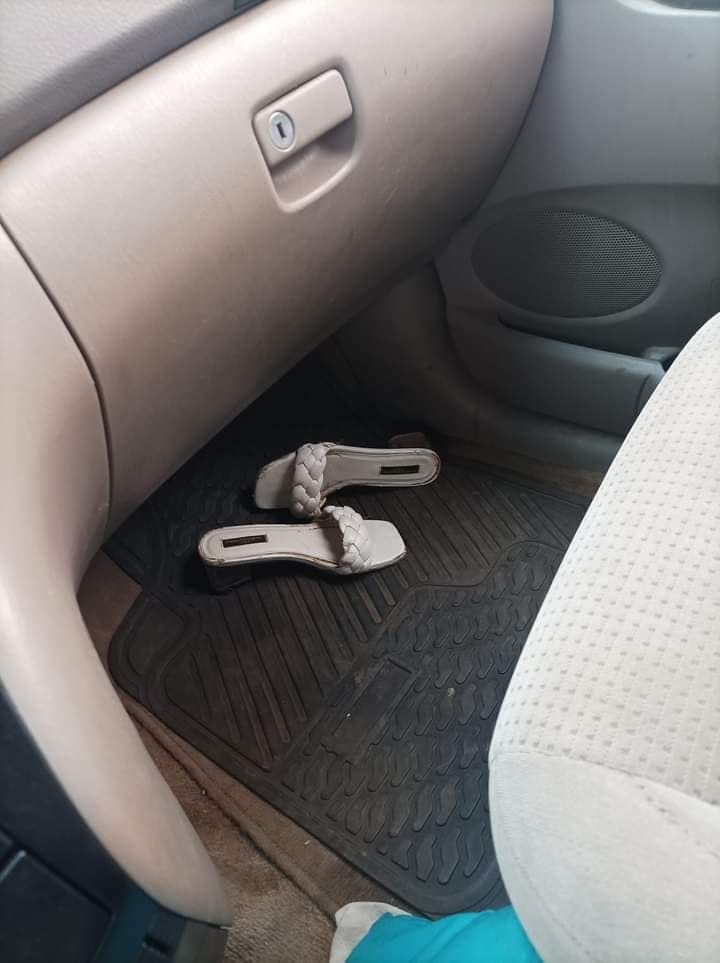
I used to have a girlfriend. Let’s call her Kendi, because even she will read this. We are no longer together, but her flag still flies over Apartment B306, because what Kendi was doing all along was not forgetting things. She was marking territory. Every item she left behind was a message, not to me, but to any other woman who might one day enter that house. A silent memo that read: “This plot has already been allocated. Kindly seek vacant land elsewhere.”
Let me walk you through the operation, phase by phase, the way DCI does a crime scene reconstruction. Mshukiwa should be holding those DCI placards sasa hivi.
EXHIBIT A: The Sleeper Cell
The first time Kendi came to my place, she came with a small handbag. Small like the brain of someone overlapping on Magadi Road. I thought it was a handbag. It was not a handbag. Inside that bag was an advance Seal team: one lip balm, one hair tie, and one earring. Not two. ONE. Because one earring left behind must be collected, and collection means a return visit, and a return visit ni colonization phase two.
But here is the genius part I only understood later. That hair tie was not left for me. It was left for HER. The next her. Any girl who entered B306 and saw a scrunchie on the door handle would receive the message instantly, the way Safaricom sends you a message the moment you cross into a new country. “Welcome to Kendi territory. Roaming charges apply.” These ladies have read Sun Tzu, I’m telling you. The Art of War, the chapter called “Leave One Earring.”
EXHIBIT B: Biological Warfare
Before Kendi, my house had the natural fragrance of a bachelor. That signature cocktail of yesterday’s githeri, gym socks, and hope. The smell of a man who is trying. Then one day she lit a scented candle.
Bro. One candle. The entire scent of the house changed, the way one hour of rain turns Nairobi into Venice. Cockroaches that had lived with me peacefully for two years packed up and migrated. Even they knew serikali imebadilika. The house began to smell of “Vanilla Dreams,” and this too was strategic. Because any visitor with a working nose would walk in, inhale once, and know immediately that a woman operates here. A bachelor pad does not smell like vanilla. A bachelor pad smells like survival talk about inanuka nguvu. I became an addict to that candle myself. I was caught at Quickmart buying stocko with my own hands. My own money. This is the Stockholm Syndrome they teach in university, or in La Casa de Papel.
EXHIBIT C: The Fridge Files
Open my fridge today and you will find: Greek yogurt, three avocados, strawberries, something called kombucha that looks like tired borehole water, and half a lemon. Guys, that half lemon has been there since February. It is now a tenant. It should start paying rent. I tried to throw it away once and was told “usiguze hio, I’m using it.” Using it when? Using it how? That lemon has more security of tenure than squatters in Mau Forest.
And think about it. What does a fridge full of Greek yogurt and strawberries tell a visiting female? It tells her that another woman shops for this house. No man in Juja wakes up and buys kombucha voluntarily. The fridge itself was a witness statement. Meanwhile, where my weekend drinks used to live, there were now “smoothie ingredients.” My juice was squeezed into a bottom corner where the cold doesn’t reach properly.
EXHIBIT D: The Pillow Complex
This is the one that hurt me the most. I had one pillow. An old pillow, flat like a chapati, but it was MINE. We had an understanding.
Then suddenly my bed had eight pillows. EIGHT. And out of those eight, only two were licensed for human use. The other six were “decorative.” Decorative for who? Who was coming to inspect? I will tell you who. The pillows were not decoration, they were a border wall. No woman walks into a man’s bedroom, sees six coordinated throw pillows, and believes that man is single. Every night I removed six pillows, every morning I returned them, like a county worker raising and lowering the flag. No salary. No allowance. Not even hardship allowance, na hii ni hardship.
I made the mistake of resting my head on a decorative pillow once when I was tired. Kendi looked at me the way Maraga looked at the 2017 presidential election. Judgment had been delivered before I could even present my defense.
EXHIBIT E: The Wardrobe Treaty
This was not even a war. It was a hostile takeover at corporate level, like those companies that get bought on the NSE while employees are still at lunch. The left side of my wardrobe started with one t-shirt “for sleeping.” I swear that t-shirt called its friends at night. Soon the entire left side was dresses, and the right side, MY side, held my clothes plus her “house clothes.” My official clothes lived in a Naivas paper bag under the bed, like refugees, waiting for a resettlement program that never came.
A wardrobe half full of dresses is not storage. It is a title deed hanging on display. Any girl who opened that wardrobe, even by accident while looking for a towel, would close it slowly and start composing her goodbye text.
And my grey hoodie? Bro. I mourned that hoodie. It entered Kendi’s possession one cold July day “juu kuna baridi.” Even now, after the breakup, I only see it on her Instagram stories. It looks happy. It has moved on. Mimi ndio sijamove on.
EXHIBIT F: The Mug
There is a pink mug by my sink. It says “But First, Coffee.” Kendi doesn’t even drink coffee. She drinks chai. That is how I knew the mug was never about beverages. The mug was a monument. It sat there, permanent, like Times Tower, announcing to all visitors that a queen reigns here. When I washed dishes, I washed it with respect and returned it to its position. I had become the caretaker of a mug. That was my role in that house. Caretaker.
FINAL TESTIMONY
The marking went beyond the house. Mama mboga would tell me, “Si umwambie Kendi her sukuma is ready.” HER sukuma. Mama mboga knew Kendi’s orders better than she knew me, and I had been buying vegetables from her for three years. The watchman opened the gate for Kendi with a smile. Me he asked, “Wewe ni wa hapa?” YES I AM WA HAPA, BONEVENTURE. I PAY THE RENT. Even the neighborhood had been captured. The territory extended past my door, down the staircase, and all the way to the gate.
There is a plant called Phyllis in the corner of my sitting room. Kendi bought her from those flower guys along Ngong Road. Phyllis got watered every three days, got sunlight rotation, and got spoken to gently. I had flu once and received “pole babe” via text. TEXT. If Phyllis had flu, an ambulance would have been called. Phyllis is still here, by the way. Healthier than me. She is the last standing soldier of the Kendi administration, and I water her out of fear.
Here is the thing about territory marking: the markers outlive the relationship. The candle scent is in the curtains. The hair ties keep appearing in corners I have cleaned twice. Last month I brought a new friend to the house. She walked in, looked around for exactly eleven seconds, picked up a scrunchie from behind the couch, held it up like Exhibit A, and said, “Nani huyu?”
I had no defense, Your Honor. The scene had been preserved too well. The first lady had marked the territory so thoroughly that the house itself testified against me.
Case closed. The accused won, and she is not even living here anymore.
Na mimi, walai, I’m still paying rent for a house that belongs to her.