

Matumbo
A Love Letter Written in tripe

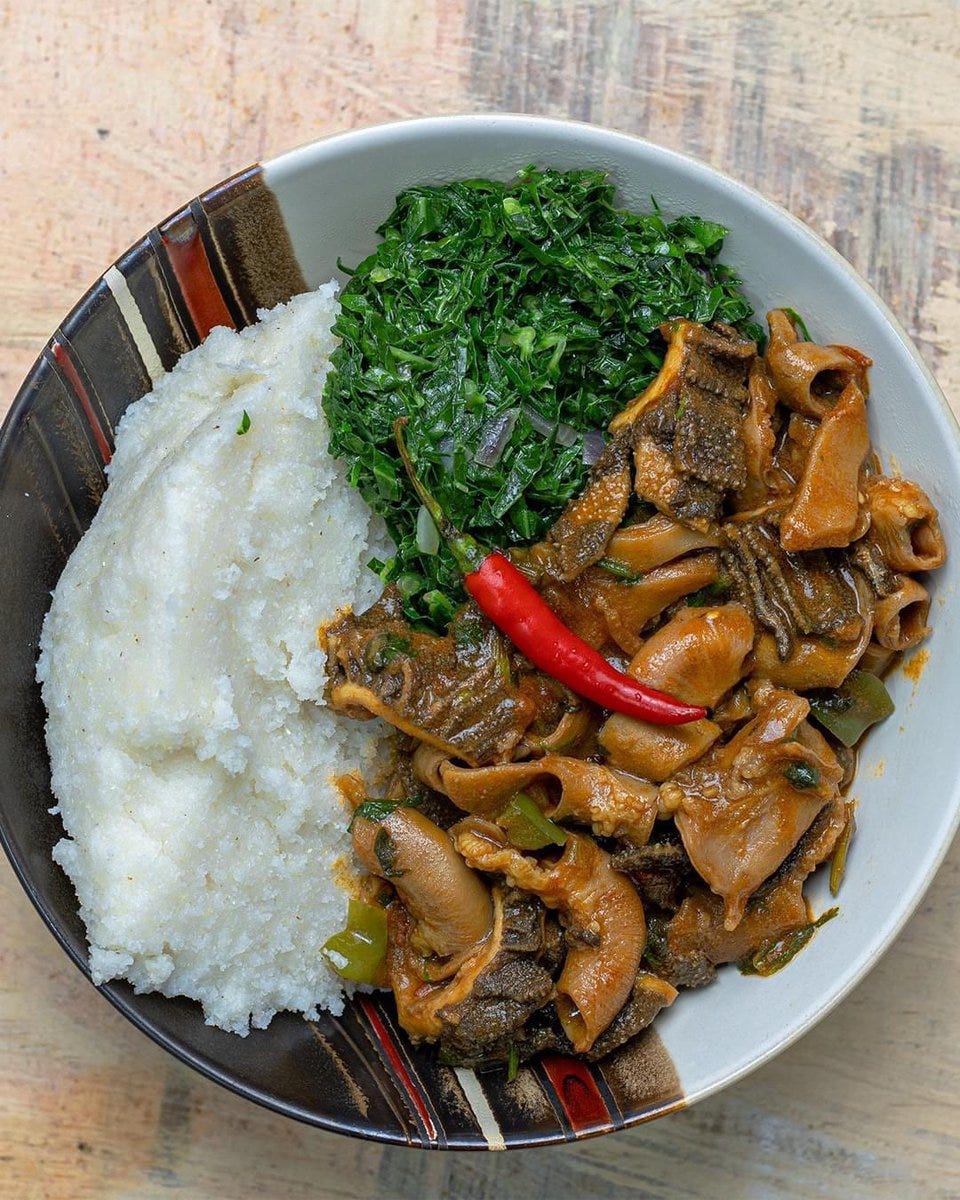
Lisa’s is closed now. Wamefunga. I passed by the spot the other day and the kibanda that fed half of Juja is just a padlock and a memory. Enzi hizo, manze. Back when Lisa’s was still Lisa’s, that wobbly seats held the entire student population of JKUAT, and the matumbo coming out of that tiny sufuria was nothing short of a religious experience.It used to be 110 plate if I’m not wrong.
I remember it clearly. A plate of matumbo steaming in front of me, soft and spicy, the supu rich enough to bring a dead man back to life. You could be broke beyond comprehension, surviving on faith and one delayed transaction alert from home, but somehow you always had enough Kenyatta shilings for a plate at Lisa’s. Lisa would serve you with that knowing look. “I gatchuu,” she would say, ladling extra soup like she was personally responsible for keeping you alive. And honestly? She was.
I would roll the ugali, scoop that soft tumbo, and feel like a whole human being again after a brutal day of lectures I did not understand. The kind of peace no campus side quest could ever offer. Around me sat the whole ecosystem of the whole village. Students pretending to revise. Boda guys on a break. A mzee in the corner who had been a Lisa’s loyalist since before any of us were born. Matumbo united us all on that seat, equal in hunger, brothers in joy. Haina noma, we used to say. No worries, The matumbo handles everything.
But to understand why that plate hit so deep, you have to understand where matumbo comes from. Because manze, this is not just chakula. This is heritage you can taste.
Start with the cow. In Kenya, the cow was never just an animal. For many communities it was wealth, it was dowry, it was the family savings account walking around on four legs. A Maasai elder counting his cattle is a man reading his bank statement. So when such a precious animal was finally slaughtered, throwing away any part of it was simply not an option. It was insulting. Our ancestors looked at the whole beast and declared, “Kila kitu ni chakula.” Everything is food. The prime cuts, yes, but also the head, the legs, the liver, and that beautiful honeycomb stomach lining and tubes we lovingly call matumbo. Nose to tail, zamani, long before fancy chefs in expensive cities “discovered” it and started charging you four thousand bob for a tiny portion. We were doing this in the shamba while they were still learning to spell the word “offals”.
This is the heart of it. Matumbo is the food of people who understood value. It fed the family after the elders and the visitors got the choice cuts. It stretched a single animal across many hungry mouths without shame, kwa sababu there is no shame in feeding people. There is only honor.
Then matumbo moved to the city, and that is where its legend exploded. When men came to build Nairobi, to break stones and pour cement and lay the foundation, they arrived broke and starving, deep in msoto. A mjengo guy lifting concrete since asubuhi does not want a delicate meal. He wants a meal that fights back. And waiting for him in a tiny kibanda was matumbo. Cheap enough for a worker’s wage, rich enough to refuel a tired body. Every road and every building in this town was partly built on plates of tripe and ugali.
From this grew the whole kibanda culture. Whole neighborhoods organized themselves around the best spots. Burma market became a legend, a temple of fresh meat where the cooks have nothing to prove. In every estate from Kawangware to Eastlando, there is a mama whose matumbo is spoken of with the reverence usually reserved for footballers and pastors. People give directions using these joints. “Pita ile place ya matumbo , turn left.” The dish is literally a landmark.
And the recipe is inheritance. A grandmother teaches her daughter, who teaches her daughter, the exact moment to add the tomatoes, the precise pinch of dhania, the right amount of pilipili to make you sweat without making you cry. Hakuna measuring cups. Just the hand, the eye, and the tongue. You cannot Google the recipe for this. You have to be fed it.
Now yes, briefly, there is the modern drama. A certain type of Nairobi baddie now wrinkles her nose at matumbo, clutching a sad green smoothie and claiming she “Matumbo eeww who eats thats,” while the real foodie(foodie fundi) baddies pull up to the kibanda in heels, roll their sleeves, and finish a plate like true patriots. That little squabble is just froth on the surface. Matumbo has survived colonialism, droughts, three currencies, and several governments that could not balance a budget. It is not threatened by a dame avoiding carbs for the gram.
So even though Lisa’s imefungwa, the matumbo lives on everywhere in this country. Every plate carries generations. The pastoralist who valued his cattle. The grandmother who wasted nothing. The worker who built this city on a full stomach. The mama who fed broke students like me out of pure love.
Lisa’s is gone. But the matumbo remembers, and so do I.
Mama ntilie Matumbo
“Matumbo eeww who eats thats,” same vibes with "matumbo ? Not matumbo for sure"😭😭 wasiwahi talk down again on matumbo
Matumbo for the win, every time. All the time.